News & Commentary
ACLU-SDIC Testimony – San Diego County Board of Supervisors Considers CLEAR Ordinance
By Eddie Meyer
Latest Press Release
ACLU-SDIC Launches EmpowerEd: A Three-Track Public Education Series

ACLU-SDIC Testimony – San Diego City Council Considers Whether to Continue Surveillance Use Policies
By Blair Overstreet
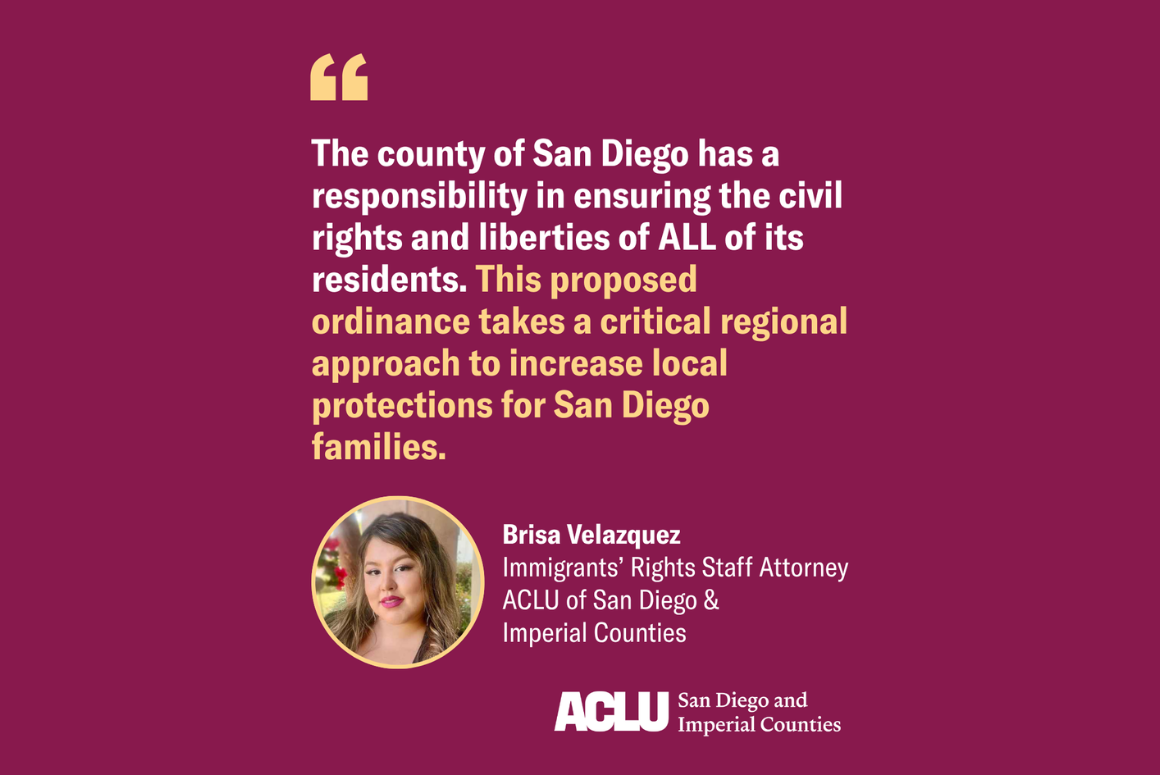
ACLU-SDIC Testimony – San Diego County Board of Supervisors Considers Drafting CLEAR Ordinance
By Brisa Velazquez
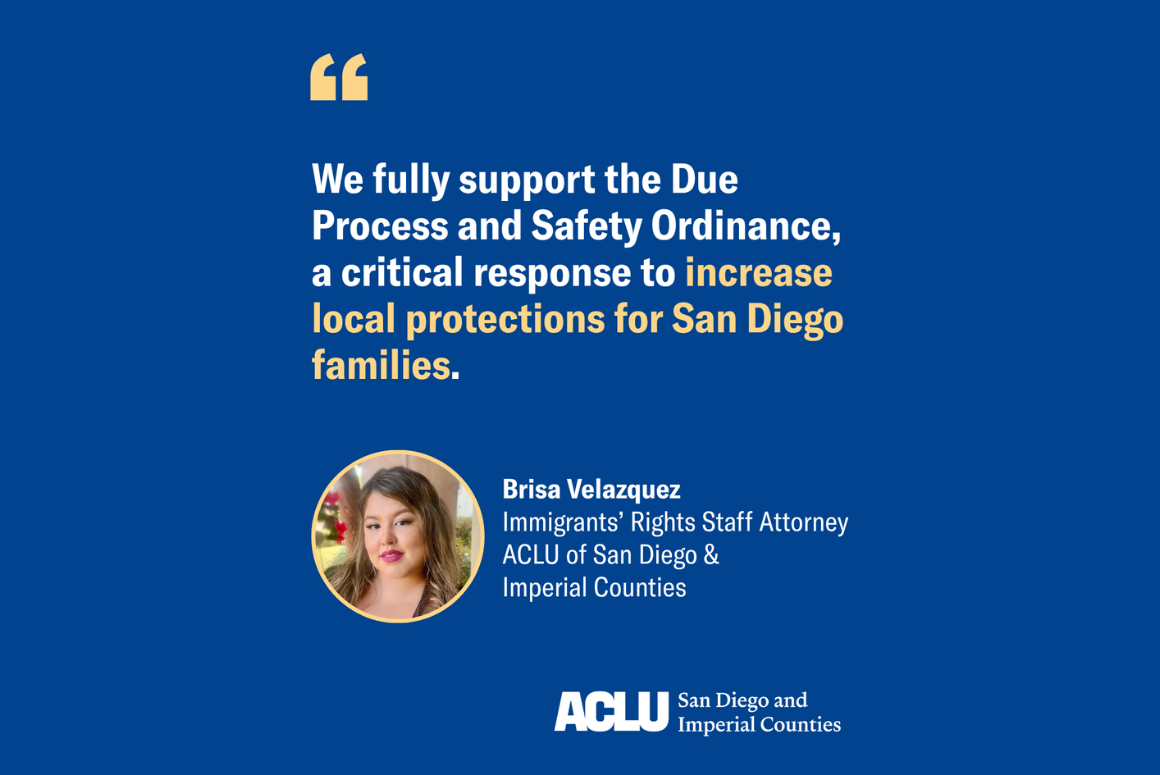
ACLU-SDIC Testimony – San Diego City Council Considers Due Process & Safety Ordinance
By Brisa Velazquez

Fighting for Free Expression: Censoring Others Leads to Others Censoring You
Download our poster of Books That Never Should Have Been Censored.
What is censorship?
Censorship is the suppression of words, images, or ideas that are offensive and occurs whenever some people succeed in imposing their personal political or moral values on others. Censorship can be carried out by the government as well as private pressure groups. Censorship by the government is unconstitutional.
What does artistic freedom include?
The Supreme Court has interpreted the First Amendment's protection of artistic expression very broadly. It extends not only to books, theatrical works and paintings, but also to posters, television, music videos and comic books--whatever the human creative impulse produces.
Two fundamental principles come into play whenever a court must decide a case involving freedom of expression. The first is "content-neutrality"--the government cannot limit expression just because any listener, or even the majority of a community, is offended by its content. This means tolerating some works that we might find offensive, insulting, outrageous, or just plain bad.
The second principle is that expression may be restricted only if it will clearly cause direct and imminent harm to an important societal interest. The classic example is falsely shouting fire in a crowded theater and causing a stampede. Even then, the speech may be silenced or punished only if there is no other way to avert the harm.
Censorship and the ACLU
Freedom of speech is protected in the First A

1960 Flashback - 40th Anniversary Issue of ACLU's Civil Liberties Newsletter: Looking Back at Looking Back
Stay Informed
Sign up to be the first to hear about how to take action.
By completing this form, I agree to receive occasional emails per the terms of the ACLU’s privacy statement.
By completing this form, I agree to receive occasional emails per the terms of the ACLU’s privacy statement.