Advancing Justice
The ACLU of San Diego & Imperial Counties works to dismantle the oppressive systems that fuel mass incarceration and disproportionately impact marginalized communities, particularly Indigenous people, Black people, Latine, API, folks from the LGBTQIA+ community and people with disabilities.
We advocate for investments in community-driven solutions to societal challenges that improve public health and safety of all people in our region.
Our work will move us toward a safer and more equitable future for all that honors the impacts of generational harm by ensuring a clear and intentional focus on impacted communities
POLICING
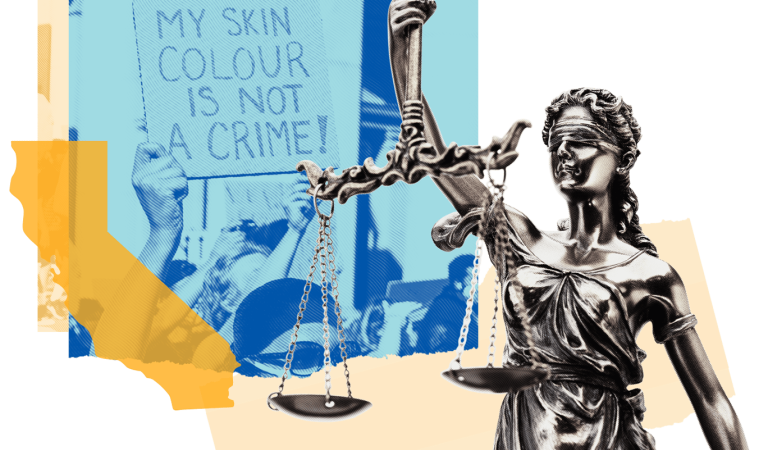
Across the nation, and here in San Diego and Imperial counties, patterns of racial and identity profiling, the selective enforcement of laws against people of color and the disproportionate use of stops, searches, arrests and use of force on communities of color illustrate the systemic bias and racism inherent in policing practices. Countless experiences from community members as well as decades worth of data analysis confirm these deeply troubling practices.
We need bold and transformational solutions that address these issues comprehensively.
We need to drastically reduce the role, responsibilities and presence of police in the everyday lives of communities.
We need to divest from police budgets and deepen our investment of money and resources in community services and non-law enforcement interventions. Learn more about the origins of modern-day policing here.
CRIMINAL LEGAL SYSTEM
The San Diego County Board of Supervisors (BoS) chooses to spend more money on departments that police and incarcerate residents than on any other county function or responsibility. The BoS spends nearly $1.6 billion, nearly 20% of the entire county budget, on the combined budgets of the district attorney and sheriff’s offices, while the budget for the public defender’s office is just $153.5 million.
The Imperial County Board of Supervisors spends $137.3 million, nearly 18% of the total budget, on “public protection” which includes the sheriff’s office, probation, juvenile hall and the district attorney, among others.
Interactions with the criminal legal system can lead to devastating outcomes such as housing and job insecurity and other profound social and economic hardships. Traffic stops, tickets, and incarceration exacerbate socio-economic issues.
By investing in alternatives to policing and the criminal legal system, we can make an impact. Some examples include:
- Investing in our public defender’s offices so that they have the resources to continue to provide impactful defense;
- Investing in community-based violence prevention programs, including youth mentorship, conflict resolution and restorative justice programs; and
- Funding alternatives to juvenile detention, such as community-based youth diversion and family support programs.
RE-IMAGINING PUBLIC SAFETY
Our elected bodies can make different budget investment choices that prioritize real safety over criminalization.
True public safety comes from funding community-centered solutions at the local level, reallocating law enforcement funds to programs that provide housing support, job placement, food assistance, childcare, access to health care, and communal spaces like parks and libraries.
One example is San Diego County’s Mobile Crisis Response Teams (MCRT), which sends teams of trained professionals—not law enforcement officers—to respond to people experiencing mental health crises. MCRT stabilizes people in crisis through intervention and de-escalation and connects people across San Diego County to community resources and treatment.




Cases, Campaigns & Legislation
PANA v. City of San Diego
Lagleva et al. v. Doyle
Take Action
Today, years of hard-fought civil liberty protections are under threat.
To influence lawmakers, we need everyone to get involved.



Stay Informed
Sign up to be the first to hear about how to take action.
By completing this form, I agree to receive occasional emails per the terms of the ACLU’s privacy statement.
By completing this form, I agree to receive occasional emails per the terms of the ACLU’s privacy statement.