News & Commentary
ACLU-SDIC Public Comment - Support for San Diego City Council's Anti-Muslim Hate Resolution
By Eddie Meyer


ACLU-SDIC Public Comment – Support for San Diego County Board of Supervisors Board Letter Regarding AB 2760 to Prohibit Shock Gloves
By Eddie Meyer
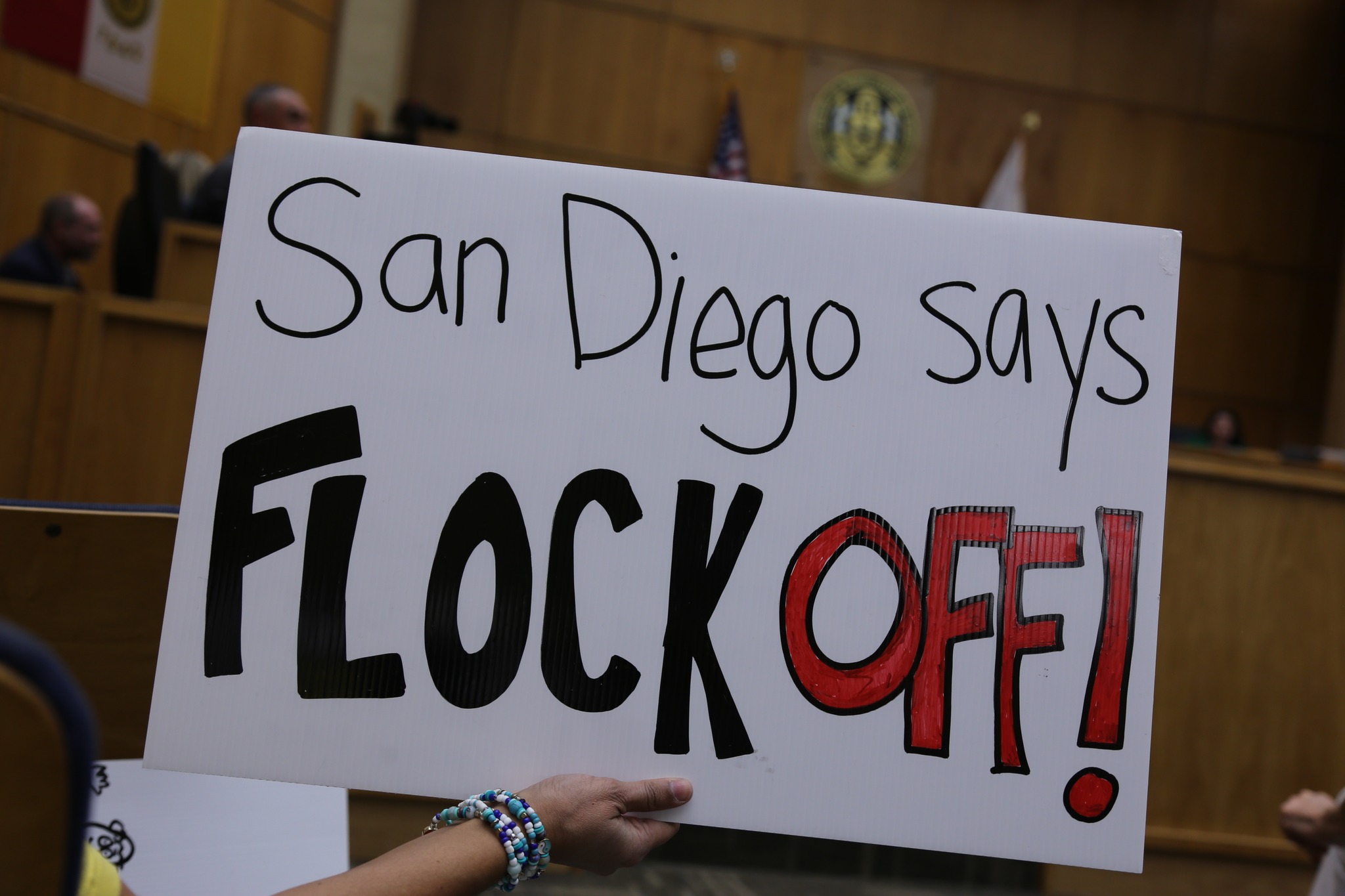
ACLU-SDIC Public Comment – End City of San Diego's ALPR Contracts
By Branden Sigua
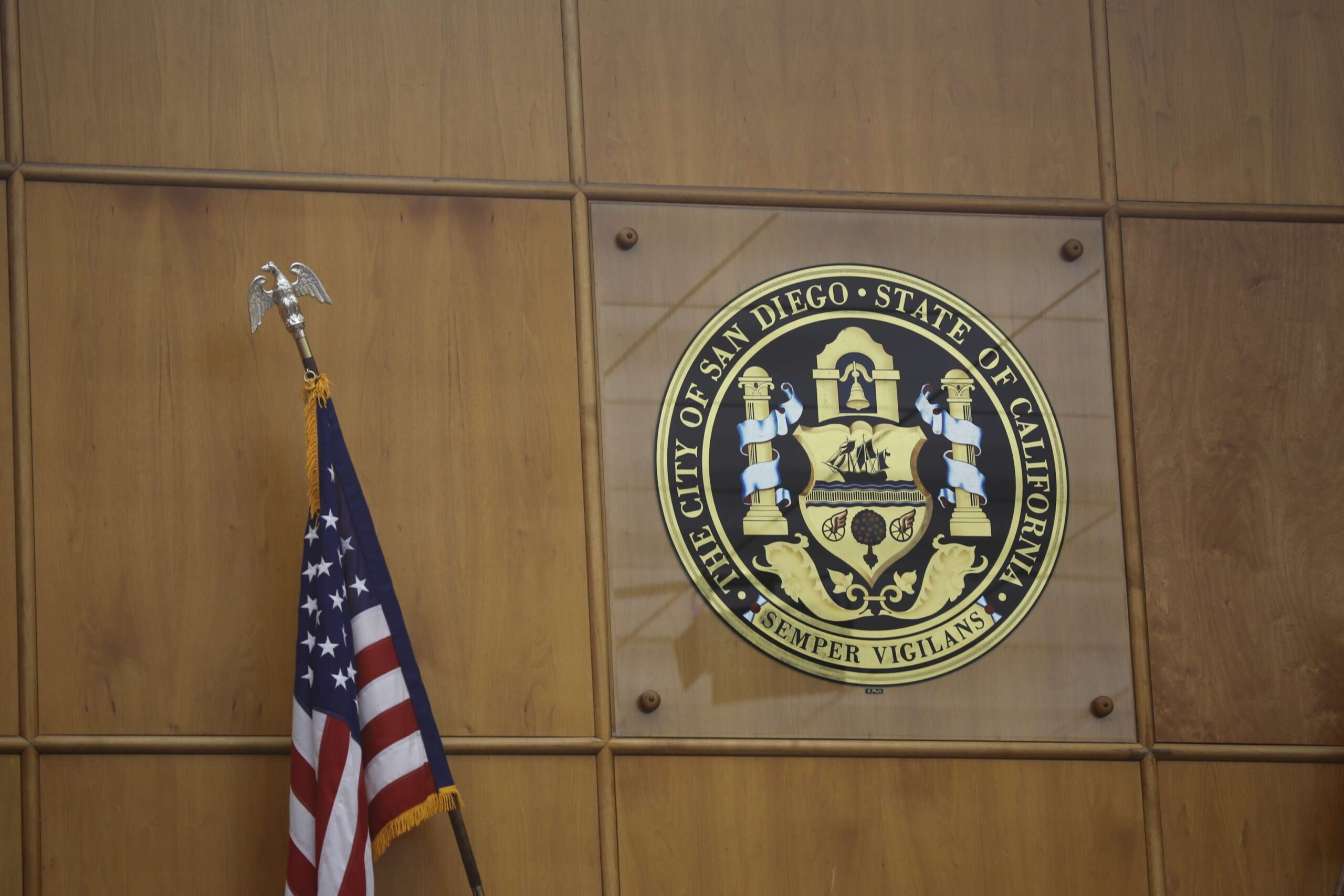
ACLU-SDIC Public Comment – City of San Diego Risk Management Presents on Settlements & Judgments Against SDPD
By Branden Sigua
Spoken Word Artists Slam for Free Speech
The First Amendment says, Congress shall make no law respecting an establishment of religion, or prohibiting the free exercise thereof; or abridging the freedom of speech, or of the press; or the right of the people peaceably to assemble, and to petition the Government for a redress of grievances.
Unabridged, from spoken word artists Steve Connell and Sekou (tha misfit), is a new collection of poetry written especially for the ACLU that celebrates the power of words and captures the passion behind several of our current battles in the courtrooms and in Congress.
Listen in and stay tuned for more...

Students Are NOT Second-Class Citizens!
In spite of the Supreme Court's ringing endorsement of students' rights in the landmark Tinker decision, constitutional violations are far too common in public schools across the country. Articles about controversial subjects written for student newspapers are censored. Lockers and backpacks are searched without reasonable suspicion. Minority students are disproportionately directed to lower track programs. Majoritarian religious practices are officially sanctioned by teachers and school administrators. Female students are excluded from certain extracurricular activities, and gay students are intimidated into silence.
Teachers and administrators have a responsibility to provide a safe environment for the students that is conducive to learning. They also have a responsibility to respect each student's individual rights. These two missions are not incompatible. Kids have rights too!
ACLU'S (Ironically Titled) Blacklist
At least twice a year, the ACLU of San Diego & Imperial Counties publishes The (ironically titled) Blacklist, a listing of San Diego's must-see arts and cultural events in all forms of media that explore civil liberties and social justice themes. Following is an electronic version. To download a copy, click on the link below.
If you have know of upcoming art events that touch on civil liberties or social justice themes that should be listed, please send us your event to be added!
Artist Friends of the San Diego ACLU
The ACLU is proud to announce the formation of the Artist Friends of the San Diego ACLU, comprising artists of all mediums to help generate public support for civil liberties and freedom of expression in the arts.
Our honorary chair, Pete Seeger, the legendary folk singer and former ACLU client, stands out among the many artists the ACLU has protected over the years for his lifelong commitment to civil liberties, social justice and the environment. The ACLU successfully represented Seeger in 1960 when he was nearly prohibited from performing at Hoover High School for refusing to sign an anti-communist loyalty oath.
With our artist friends, we will host occasional forums and performances that bring together the arts and civil liberties.
We will publish the (ironically titled) Blacklist, a listing of the must-see performances, exhibits, readings, openings and shows that address civil liberties or social justice themes.
To do so, we need your help! If you work in the arts, are an artist, author or performer in any medium or genre and support civil liberties, please contact us! If you know about upcoming art events that touch on civil liberties or social justice themes that should be included on our Blacklist, please contact us.
Artist Friends of the San Diego ACLU
Honorary Chair
Pete Seeger
Members
Rae Armantrout, UCSD Writing Professor, Pulitzer Prize winner
Doris Bittar, painter
Alan DiBona, Theater Professor
Kevin Greene, IP Law Professor
Wade Harb, Painter
Linda Moore, Linda Moore Art Gallery
Abe Ordover, Abe Ordover Art Gallery
Gregory Page, Musician
Tim Pyles, 94.9 DJ
Jeff Slattery, Art Law Professor
Organizational Members
Aja Project (Sandra Ainslie, Executive Director)
The Book Works (Lisa Stefanacci, Owner)
Playwrights Project (Cecelia Kouma, Executive Director)
San Diego Asian Film Festival (Lee Ann Kim, Executive Director)
San Diego Writers, Ink (Judy Reeves, Executive Director)
So Say We All (Justin Hudnall, Executive Director)
UCSD Theatre & Dance (Arthur Wagner, Founder and Emeritus Faculty)
Safeguarding a Woman's Right to Choose
The ACLU protects everyone's right to make informed decisions free from government interference about whether and when to become a parent.
We work every day to protect access to safe and legal abortion care, contraceptives, and information on how to prevent unintended pregnancies and STDs. In the world we envision, everyone would have the resources they need to raise healthy families and lead healthy lives.
Few decisions are more personal and intimate, more properly private, or more basic to individual dignity and autonomy, than a woman's decision whether to end her pregnancy. A woman's right to make that choice freely is fundamental.
— U.S. Supreme Court Justice Harry A. Blackmun, Thornburgh v. American College of Obstetricians & Gynecologists (1986)
A woman's right to decide whether or not to bear a child was secured in 1973 by the U.S. Supreme Court decision in Roe v. Wade. The anti-choice movement continues to seek the passage of laws to restrict women's reproductive freedom, and anti-choice extremists have pursued a campaign of harassment and sometimes violence against abortion clinics and providers.
The California Constitution explicitly protects reproductive privacy, making the state a relative safe haven for women who make the difficult choice to end a pregnancy. The ACLU worked hard to secure this right. We continue to use litigation, legislative advocacy, public education, and grassroots organizing to protect and advance the rights of all California women to make informed personal decisions about childbearing.
Recent ACLU Cases Defending the Constitutional Rights of Christians
This list illustrates just how ardently the ACLU works to defend the rights of Americans to practice their own religion in the manner that speak most compellingly to them as citizens and as people of faith.
ACLU of Southern California (2008) filed suit on behalf of members of a faith-based charity organization after park rangers threatened to arrest the members for serving hot meals and distributing Bibles to the homeless on Doheny State Beach. More on the case.
ACLU of Louisiana (2008) filed a brief before the U.S. Court of Appeals for the Fifth Circuit supporting an individual's right to quote Bible verses on public streets in Zachary, Louisiana. More on the case.
ACLU and the ACLU of Texas(2008) filed a friend-of-the-court brief in the Texas Supreme Court in support of mothers who had been separated from their children by the Texas Department of Family and Protective Services (DFPS). The DFPS seized more than 450 children from their homes in Eldorado, Texas following vague allegations about child abuse by some members of the Fundamentalist Church of Jesus Christ of Latter-day Saints. While fully supporting the state's commitment to protecting children from abuse, the ACLU argued that Texas law and the U.S. Constitution required that the children be returned unless the state could provide the requisite evidence of abuse. Neither Texas law nor the U.S. Constitution allows the state to separate children and their parents based on purported cultural harm alone or on the state's disapproval of the families' religious beliefs. In May 2008, the Texas Supreme Court unanimously ruled, consistent with the ACLU position, that the state must return the children to their homes pending further investigation of allegations of abuse. More on the case here and also and here.
ACLU of Florida (2007) argued in favor of the right of Christians to protest against a gay pride event held in the City of St. Petersburg. The City had proposed limiting opposition speech, including speech motivated by religious beliefs, to restricted "free speech zones." After receiving the ACLU's letter, the City revised its proposed ordinance. More on the case.
ACLU of Oregon (2007) defended the right of students at a private religious school not to be pressured to violate their Sabbath day by playing in a state basketball tournament. The Oregon School Activities Association scheduled state tournament games on Saturdays, the recognized Sabbath of students and faculty of the Portland Adventist Academy. The ACLU argued that the school's team, having successfully made it to the tournament, should not be required to violate their religious beliefs in order to participate. More on the case here and also and here.
ACLU of West Virginia (2007) sued on behalf of a Church of Jesus Christ of Latter-day Saints (Mormon) university student who won a prestigious scholarship to West Virginia University. Although the state scholarship board provided leaves of absence for military, medical, and family reasons, it denied the ACLU's client a leave of absence to serve on a 2-year mission for his church. The ACLU filed a religious freedom claim in federal court. More on the case.
ACLU of North Carolina (2007) challenged a North Carolina Department of Corrections policy making all religious services in prison English-only, thereby denying access to many inmates. The North Carolina Division of Prisons agreed to review the policy and the need for religious services in languages other than English in the state correctional system.
ACLU of Wisconsin (2007) filed a friend-of-the-court brief arguing that individual pharmacists should be able to refuse to fill prescriptions that violate their religious scruples, provided that patients can obtain prescriptions from willing providers in a safe and timely manner. More on the case.
ACLU of New Jersey (2007) defended the right of an elementary school student who was prohibited from singing "Awesome God" in a voluntary, after-school talent show for which students selected their own material. The ACLU submitted a friend-of-the-court brief. After a favorable settlement was reached for the student, the federal lawsuit was dismissed. More on the case.
ACLU and the ACLU of Pennsylvania (2007) prevailed in their case on behalf of an Egyptian Coptic Christian who had been detained and who claimed he had been tortured by the Egyptian government because he refused to convert to Islam. After permitting Sameh Khouzam to stay in the United States for nine years based on evidence that he would probably be tortured if he returned to Egypt, the U.S. government changed its position in 2007 and sought to deport Mr. Khouzam based on diplomatic assurances from the Egyptian government that Mr. Khouzam would not be tortured upon return. As a result of the ACLU's advocacy, a federal court granted Mr. Khouzam an indefinite stay of deportation to Egypt. More on the case.
ACLU of North Carolina (2007) wrote a letter to the Dismas Charities Community Correction Center on behalf of a former resident who was told he could not drink wine during communion services while confined at the Center. After the ACLU advised the Center of its obligations under the Religious Land Use and Institutionalized Persons Act of 2000, the Center revised its communion policy to comply with federal law.
ACLU of Georgia (2007) filed a federal lawsuit to help obtain a zoning permit for a house of worship on behalf of the Tabernacle Community Baptist Church after the city of East Point denied the request. The city has since repealed the ordinance and churches are now allowed to occupy buildings that were previously used for commercial purposes. More on the case here and also here.
ACLU of Delaware (2007) prevailed in a lawsuit brought on behalf of Christians, pagans, and Wiccans, alleging that a department store violated a Delaware public accommodations law by canceling community courses after individuals complained about the religious beliefs that were being taught in the centers.
ACLU of Eastern Missouri (2007) represented Shirley L. Phelps-Roper, a member of the Westboro Baptist Church, whose religious beliefs led her to condemn homosexuality as a sin and insist that God is punishing the United States. The protests in which she has been involved have been confrontational and have involved funerals of soldiers killed in Iraq. While the ACLU does not endorse her message, it does believe that she has both religious and free-speech rights to express her viewpoint criticizing homosexuality. More on the case.
ACLU of North Carolina (2007) assisted with the naturalization of a Jehovah's Witness who was originally denied citizenship based on his conscientious refusal to swear an oath that he would be willing to bear arms on behalf of the country.
ACLU of Rhode Island (2007) prevailed in its arguments on behalf of a Christian inmate, Wesley Spratt, who had been preaching in prison for over seven years before administrators told him to stop based on vague and unsubstantiated security concerns. After the ACLU prevailed in the First Circuit, the parties reached a settlement under which Mr. Spratt is free to preach again. More on the case.
ACLU of the National Capital Area (2007) brought suit on behalf of Christian, Muslim, and Jewish firefighters and paramedics who wear beards as a matter of religious observance. The U.S. District Court for the District of Columbia agreed with the ACLU that the District of Columbia's policy prohibiting these individuals from wearing beards violated their religious freedom rights. More on the case.
ACLU of San Diego & Imperial Counties filed a friend-of-the-court brief on behalf of a Poway High School student who was prohibited from wearing a t-shirt that said, "Be ashamed, our school embraced what God has condemned," and "Homosexuality is shameful. Romans 1:27." The 9th Circuit held that such speech inherently invades the rights of other students as a "verbal assault." The ACLU brief argued the proper balance between freedom of speech and educational opportunity, saying that under the First Amendment, an idea, standing alone, is not harassment, no matter how offensive or repugnant some may find it to be. More on the case.
ACLU of Louisiana (2006) reached a favorable settlement after filing a federal suit against the Department of Corrections on behalf of an inmate who was a member of the Church of Jesus Christ of Latter-day Saints (Mormon). The inmate, Norman Sanders, was denied access to religious services and religious texts including The Book of Mormon. More on the case.
ACLU of Texas (2006) filed a friend-of-the-court brief in support of a Christian pastor and his faith-based rehabilitation facility in Sinton, Texas. The ACLU of Texas urged the court to reverse a decision that prohibited the pastor from operating his rehabilitation program near his church and also sharply limited the reach of the Texas Religious Freedom Restoration Act (RFRA). More on the case.
ACLU of Louisiana (2006) prevailed in its lawsuit defending the right of a Christian man to exercise his religious and speech rights by protesting against homosexuality in front of a Wal-Mart store with a sign that read: "Christians: Wal-Mart Supports Gay Marriage and Gay Lifestyles. Don't Shop There." More on the case here and also and more here.
The ACLU of Pennsylvania (2005) (in conjunction with Americans United) in Kitzmiller v. Dover Area School District won a Federal court case on behalf of parents of public school children against the school district that had attempted to impose religious beliefs on those who did not share them. (Read the opinion. The parents objected that the religious beliefs, under the guise "intelligent design" as an alternative to the theory of evolution, violated their religious liberty by promoting particular religious beliefs to their children under the guise of science education. More on the case.
The ACLU of Nevada (2005) defended the free exercise rights and free speech rights of evangelical Christians to preach on the sidewalks of the Strip in Las Vegas. More on the case.
The ACLU of New Mexico (2005) joined forces with the American Family Association to succeed in freeing a preacher, Shawn Miller, from the Roosevelt County jail, where he was held for 109 days for street preaching. The ACLU became involved at the request of Miller's wife, Theresa. More on the case.
The ACLU of New Jersey (2005) filed a a motion to submit a friend-of-the-court brief on behalf of Olivia Turton, a second-grade student who was forbidden from singing "Awesome God" in a voluntary, after-school talent show. The only restriction on the student's selection for the talent show was that it be "G-rated." The case, filed in federal court, is Turton, et al. v. Frenchtown Elementary School, et al. More on the case.
The ACLU of Michigan (2005) filed a federal lawsuit on behalf of Joseph Hanas, a Catholic, who was criminally punished for not completing a drug rehabilitation program run by a Pentecostal group. Part of the program required reading the Bible for seven hours a day, proclaiming one's salvation at the alter, and being tested on Pentecostal principles. Staff confiscated Mr. Hanas's rosary and told him Catholicism was witchcraft. More on the case.
The ACLU of Louisiana (2005) filed suit against the Department of Corrections on behalf of a Mormon inmate, Norman Sanders, who was denied the right to practice his religion by being denied access to religious texts, including The Book of Mormon, and Mormon religious services. "Mormons should receive the same accommodation of their beliefs as do individuals of other faiths," said Joe Cook, Executive Director, ACLU of Louisiana. "Fair and equal treatment means they deserve the right to a place to meet, have a minister and discuss their beliefs like other groups." More on the case.
The ACLU of Pennsylvania (2005) won a battle against Turtle Creek Borough that repeatedly denied an occupancy permit to a predominantly African-American church, Ekklesia, which had purchased the church building from a predominantly white parish. The case is Ekklesia Church v. Borough of Turtle Creek. The case was settled. More on the case.
The ACLU of Oregon (2004-05) filed suit on behalf of high school basketball players from an Adventist school against the Oregon School Activities Association, which administers competitive athletic and artistic competitions in Oregon high schools. The ACLU argued that the Adventist basketball players who have made it to the state tournament should not be required to play tournament games on Saturday, their Sabbath. The case, argued in Oregon courts, is Nakashima v. Board Of Education. More on the case.
The ACLU of Nevada (2004) represented a Mormon high school student, Kim Jacobs, who school authorities suspended and then attempted to expel for not complying with the school dress code and wearing T-shirts with religious messages. Jacobs won a preliminary victory in court where the judge ruled the school could not expel her for not complying with the dress code. The First Amendment issue of student expression is before the Ninth Circuit. More on the case.
The ACLU of Washington (2004) reached a favorable settlement on behalf of Donald Ausderau, a Christian minister, who wanted to preach to the public on Plaza sidewalks. More on the case.
The ACLU of Virginia (2004) interceded with local authorities on behalf of Baptist preachers who were refused permission to perform baptisms in the river in Falmouth Waterside Park in Stafford County. More on the case and yet more.
The ACLU of Pennsylvania (2004) was victorious in its arguments that government had to accommodate Amish drivers who used highly reflective gray tape on their buggies instead of orange triangles, to which the Amish objected for religious reasons. More on the case.
The ACLU of New Jersey (2004) appeared as amicus curaie in opposition to a prosecutor's act of striking potential jurors from a jury pool based on the fact that the prosecutor perceived those individuals to be "demonstrative about their religion." One potential juror was a missionary; the other juror was wearing Muslim religious garb, including a skull cap. The ACLU-NJ argued that such an action violates the religion clauses of both the United States and New Jersey Constitutions. It also argued that not only is it inappropriate for jurors to be struck because they are demonstrable about their religion but, in addition, such a basis will often amount to a removal based upon a particular religious belief or affiliation and will lead to discrimination against identifiable religious minorities. The case is State v. Fuller (NJ SCt 2004). More on the case.
The ACLU of Pennsylvania (2004) settled a lawsuit on behalf of Second Baptist Church of Homestead, a predominantly African-American church that had been denied a zoning permit to operate in a church building purchased by a white congregation. The occupancy permit was awarded in 2002, and in 2004, the Borough of West Mifflin agreed to pay damages and compensate the church for its loses. The case is Second Baptist Church of Homestead v. Borough of West Mifflin. More on the case; and more; and still more.
The ACLU of Massachusetts (2003) intervened on behalf of a group of students at Westfield High School who were suspended for distributing candy canes and a religious message in school. The ACLU succeeded in having the suspensions revoked and filed an amicus brief in a lawsuit brought on behalf of the students against the school district. More on the case.
The ACLU of Rhode Island (2003) interceded on behalf of an interdenominational group of carolers who were denied the opportunity to sing Christmas carols on Christmas Eve to inmates at the women's prison in Cranston, Rhode Island.
The Iowa Civil Liberties Union (2002) publicly supported a group of Christian students who filed a lawsuit against Davenport Schools asserting their right to distribute religious literature during non-instructional time. The ICLU filed a friend-of-the-court brief in the suit on behalf of the students. More on the case.
The ACLU of Massachusetts (2002) filed a brief supporting the right of the Church of the Good News to run ads criticizing the secularization of Christmas and promoting Christianity as the "one true religion" after the Massachusetts Bay Transportation Authority refused to allow the paid advertisements to be posted and to sell additional advertising space to the church. More on the case.
The ACLU of Virginia (2002)joined the Rev. Jerry Falwell in winning a lawsuit arguing the Virginia Constitution's provision that bans religious organizations from incorporating is unconstitutional. More on the case.
The ACLU of Michigan (beginning in 2001) represented Abby Moler, a student at Sterling Heights Stevenson High School, whose yearbook entry was deleted because of its religious content. More on the case.
The ACLU of Massachusetts (2000) defended inmate Peter Kane's right to exercise his religious beliefs when prison officials confiscated his rosary beads. The rosary beads were black and white and prison rules allow only solid-colored beads. More on the case.
The ACLU of Virginia (2000) represented Charles D. Johnson, a street preacher who was convicted under Richmond's noise ordinance. The Virginia Court of Appeals reversed his conviction in 2000. The case is Johnson v. City of Richmond, 2000 WL 1459848 (Va. App. 2000).
The ACLU of Virginia (1999) filed suit against the Department of Defense and the Office of Personnel Management on behalf of Michelle Hall, a Jehovah's Witness who was fired from her job as a produce worker at Ft. Belvoir commissary because she refused to sign a loyalty oath. Ms. Hall objected to a phrase in the oath, that she would "bear true faith and allegiance to" the Constitution, because it contradicts her undivided allegiance and faithfulness to Jehovah. The ACLU argued the oath violated Ms. Hall's freedom of religion and speech rights. In a settlement, Ms. Hall was reinstated and given back pay. More on the case.
The ACLU of Eastern Missouri (1999) secured a favorable settlement for a nurse, Miki M. Cain, who was fired for wearing a cross-shaped lapel pin on her uniform. More on the case.
The ACLU of Virginia (1997-1999) represented Rita Warren and her mission to erect a cr�che on Fairfax County government space that had been set aside as a public forum. The ACLU argued restricting the use of the public forum to county residents only was an unreasonable restriction. The Fourth Circuit Court of Appeals agreed with the ACLU. More on the case.
The ACLU of Iowa (1997) represented Conservative Christians in Clarke County and won the right to force a county referendum on gambling. More on the case.
The ACLU of Pennsylvania Greater Pittsburgh Chapter (1997) represented Carlyn Kline, a fundamentalist Christian woman who challenged the legality of a mandatory divorce-counseling program conducted by Catholic Charities. Her religious beliefs prohibited her from attending "non-Christian" counseling.
The ACLU of Pennsylvania Greater Pittsburgh Chapter (1997) intervened on behalf of a Mennonite nurse and prevented his firing for refusing to shave his beard for religious reasons. The employer demanded the nurse shave his beard so the state-issued mask to guard against tuberculosis would fit tightly despite the employee's offer to purchase a more expensive mask that would is approved for work with T.B. patients and that would fit properly with his beard intact. After receiving telephone calls and letters from the ACLU, the state employer agreed to accommodate the nurse's religion.
Amish farmers benefited from the ACLU of Pennsylvania Greater Pittsburgh Chapter's letter threatening a lawsuit if the Elk Lick Township rescind a municipal ordinance that prohibited farm tractors with steel wheels from traveling on or over the township's roads. Amish religious beliefs dictate that they maintain steel wheels on their tractors and the ordinance prevented Amish farmers from moving their tractors from one farm to another, and in some cases from one part of their property to another. The township rescinded the ordinance in 1995 and dropped all charges against the various persons charged under the ordinance.
The ACLU of Pennsylvania Greater Pittsburgh Chapter (1995) represented a 17-year-old foster child who was being forced to attend her foster family's church. The foster child was Methodist and the church she was being forced to attend was not of the Methodist faith. After the ACLU threatened to sue the county allowed the child to attend a Methodist church and placed her in a different foster home.
The ACLU of Pennsylvania Greater Pittsburgh Chapter (1995) secured the right of a minister from the United Methodist Church to hold meetings in the Harmony Township Borough building that was open for use by community groups.
Iowa affiliate of the ACLU (1995) represented and vindicated the free speech and religious expression of a conservative Christian activist, Elaine Jaquith of Waterloo, who had been denied access to broadcast her message on public television. More on the case.
The ACLU of Texas (beginning in 1995) represented Catholic and Mormon Santa Fe High School students who opposed the proselytizing prayers offered by the school's student council chaplain over the public address system prior to home football games. The U.S. Supreme Court agreed that public schools should not be used to proselytize on behalf of religion. Santa Fe Independent School Dist. v. Doe, 530 U.S. 290 (2000). More on the case.
The ACLU of Vermont (1994-95) represented evangelical Christians Freda and Perry Hollyer, who were denied Medicaid and food stamp benefits because they refused to obtain social security numbers for their children. The Hollyers believed that obtaining social security numbers for their children ran contrary to their understanding of the Book of Revelations. The ACLU appealed the denial to the state's Human Services Board. The Board ruled in favor of the Hollyers holding that the state's legitimate interests in preventing fraud could be achieved without use of a social security number. The Board's ruling is on file with the ACLU's Program on Freedom of Religion and Belief.
The ACLU of Utah (1990s) represented an evangelical Christian ministry that had been evicted and denied future access as a vendor at a state fair because fair-goers objected to the religious content of the message. More on the case.
List generated by the ACLU Program on Freedom of Religion and Belief
Report Racial Profiling
Our national office is collecting much needed data about the prevalence, patterns, and characteristics of racially discriminatory highway stops by state, county and local police departments.
Click on the link below to report a stop that you think was questionable.
Stay Informed
Sign up to be the first to hear about how to take action.
By completing this form, I agree to receive occasional emails per the terms of the ACLU’s privacy statement.
By completing this form, I agree to receive occasional emails per the terms of the ACLU’s privacy statement.