News & Commentary

ACLU-SDIC Public Comment – Support for San Diego County Board of Supervisors Board Letter Regarding AB 2760 to Prohibit Shock Gloves
By Eddie Meyer


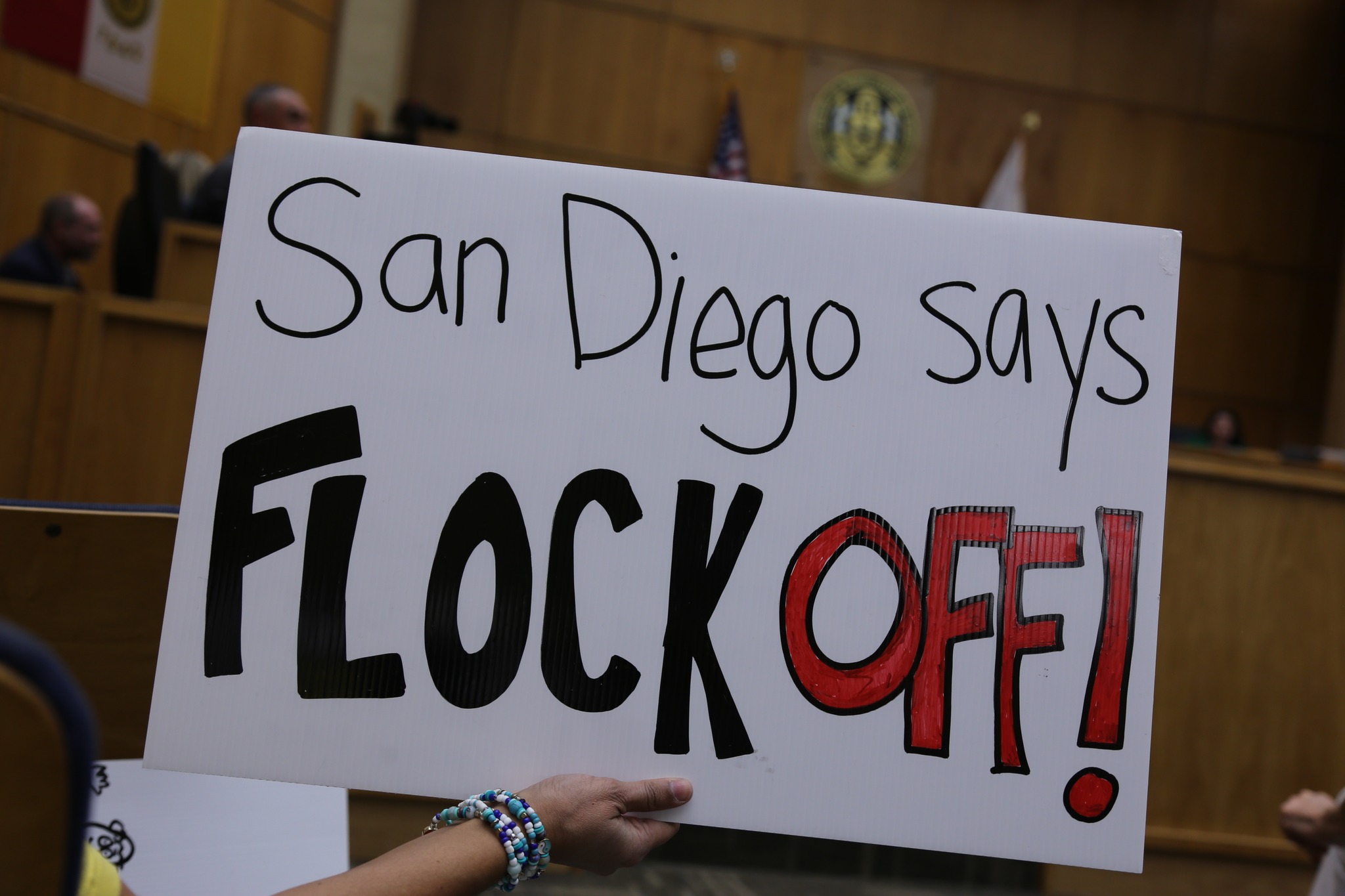
ACLU-SDIC Public Comment – End City of San Diego's ALPR Contracts
By Branden Sigua
California Congressmembers Push Back on DHS over Driver’s Licenses for Immigrants
###
About the Drive California Coalition
Drive California is comprised of a wide range of civil and immigrants’ rights organizations working to ensure to successful implementation of California’s landmark drivers’ license program for immigrants. Members include, Asian Americans Advancing Justice – Los Angeles (AAAJ-LA), the American Civil Liberties Union of California (ACLU-CA), the American Friends Service Committee (AFSC), the California Immigrant Policy Center (CIPC), Coalition for Humane Immigrant Rights of Los Angeles (CHIRLA), Council on American-Islamic Relations California (CAIR-CA), Educators for Fair Consideration (E4FC), Justice for Immigrants Coalition in San Bernardino (JFIC), Pacific Institute for Community Organization (PICO), Presente, the Services, Immigrant Rights, and Education Network (SIREN), and TODEC – Training Occupational Development Educating Communities.
Members of California's Congressional Delegation Who Signed On to Rep. Vargas's Letter
Rep. Juan Vargas (51st CD)
Rep. Xavier Becerra (34th CD)
Rep. Julia Brownley (26th CD)
Rep. Tony Cárdenas (29th CD)
Rep. Judy Chu (32nd CD)
Rep. Sam Farr (20th CD)
Rep. Janice Hahn (44th CD)
Rep. Mike Honda (17th CD)
rep. Jared Huffman (2nd CD)
Rep. Barbara Lee (13th CD)
Rep. Alan Lowenthal (47th CD)
Rep. Doris Matsui (6th CD)
Rep. Gloria Negrete McLeod (35th CD)
Rep. Lucille Roybal-Allard (40th CD)
Rep. Loretta Sanchez (46th CD)
Rep. Adam Schiff (28th CD)
Rep. Eric Swalwell (15th CD)
Rep. Mark Takano (41st CD)
Rep. Mike Thompson (5th CD)

DMV Releases Draft Regulations on Driver's Licenses under AB 60
The California Department of Motor Vehicles (DMV) released draft regulations today that outline the potential process and requirements necessary for undocumented immigrants living in California to apply for driver licenses.
Since October 2013, when
Don't Chip Our Rights Away!
Radio Frequency Identification (RFID) tags are tiny computer chips that can be encoded with any type of information. These chips are embedded within documents or objects to be used for monitoring or tracking purposes. When an RFID reader emits a radio signal, the RFID tags in the vicinity respond by automatically transmitting their stored information to the reader, at a distance, without alerting anyone that the tag is being read.
RFID technology originally gained a foothold in the commercial sector as a means to allow real-time monitoring and tracking of cattle in the fields and inventory moving through the supply chain.
U.S. government initiated the rollout of RFID-embedded passports, and there are potential plans to embed RFID tags in other identification documents.
How does it really work? The information that has traditionally been printed on the face of ID cards, such as our name, address, and unique identifier number, is encoded on the chip in the card. Without adequate privacy and security protections, our personal information could be transmitted without our knowledge. That means that whether we are walking down the street, participating in a political rally, or visiting a doctor's office or a gun show, we are at risk of being tracked and stalked and of having our identity stolen.
The ACLU has been working to protect privacy, personal safety, and financial security and bring attention to the risks associated with the use of RFID technology in identification documents.
The Real ID Act
The Real ID Act was passed by Congress last year, with no hearings, as part of a must-pass military appropriations bill. Real ID will turn state driver's licenses into national identity cards, and impose numerous financial and bureaucratic burdens on taxpayers and state governments.
The act rolls back civil liberties protections, attacks privacy rights, and sets the stage for a national ID. Many diverse groups, including the ACLU, the National Council of State Legislatures, the National Governors Association, and the American Association of Motor Vehicle Administrators are opposed to the Real ID Act. Conservative estimates place the minimum cost of the program at $12 billion, and some believe it could cost at least double that.
Read more about the act in our Frequently Asked Questions.
Privacy Rights Are a Fundamental American Value
Justice Potter Stewart wrote that "The Fourth Amendment and the personal rights it secures have a long history. At the very core stands the right of a man to retreat into his own home and there be free from unreasonable government intrusion."
From using the telephone to seeking medical treatment to applying for a job or sending e-mail over the Internet, our right to privacy is in peril. Our personal and business information is being digitized through an ever-expanding number of computer networks in formats that allow data to be linked, transferred, shared and sold, usually without our knowledge or consent. The same technological advances that have brought enormous benefits to humankind also make us more vulnerable than ever before to unwanted snooping.
As technology provides new ways to gather information and databases proliferate, the need for privacy protections becomes more urgent. The ACLU is a national leader in working to guarantee that individuals may determine how and when others can gain access to their personal information.
Stay Informed
Sign up to be the first to hear about how to take action.
By completing this form, I agree to receive occasional emails per the terms of the ACLU’s privacy statement.
By completing this form, I agree to receive occasional emails per the terms of the ACLU’s privacy statement.