News & Commentary
ACLU-SDIC Public Comment – Support for San Diego City Council’s Anti-Muslim Hate Resolution
By Eddie Meyer



ACLU-SDIC Public Comment – Support for San Diego County Board of Supervisors Board Letter Regarding AB 2760 to Prohibit Shock Gloves
By Eddie Meyer
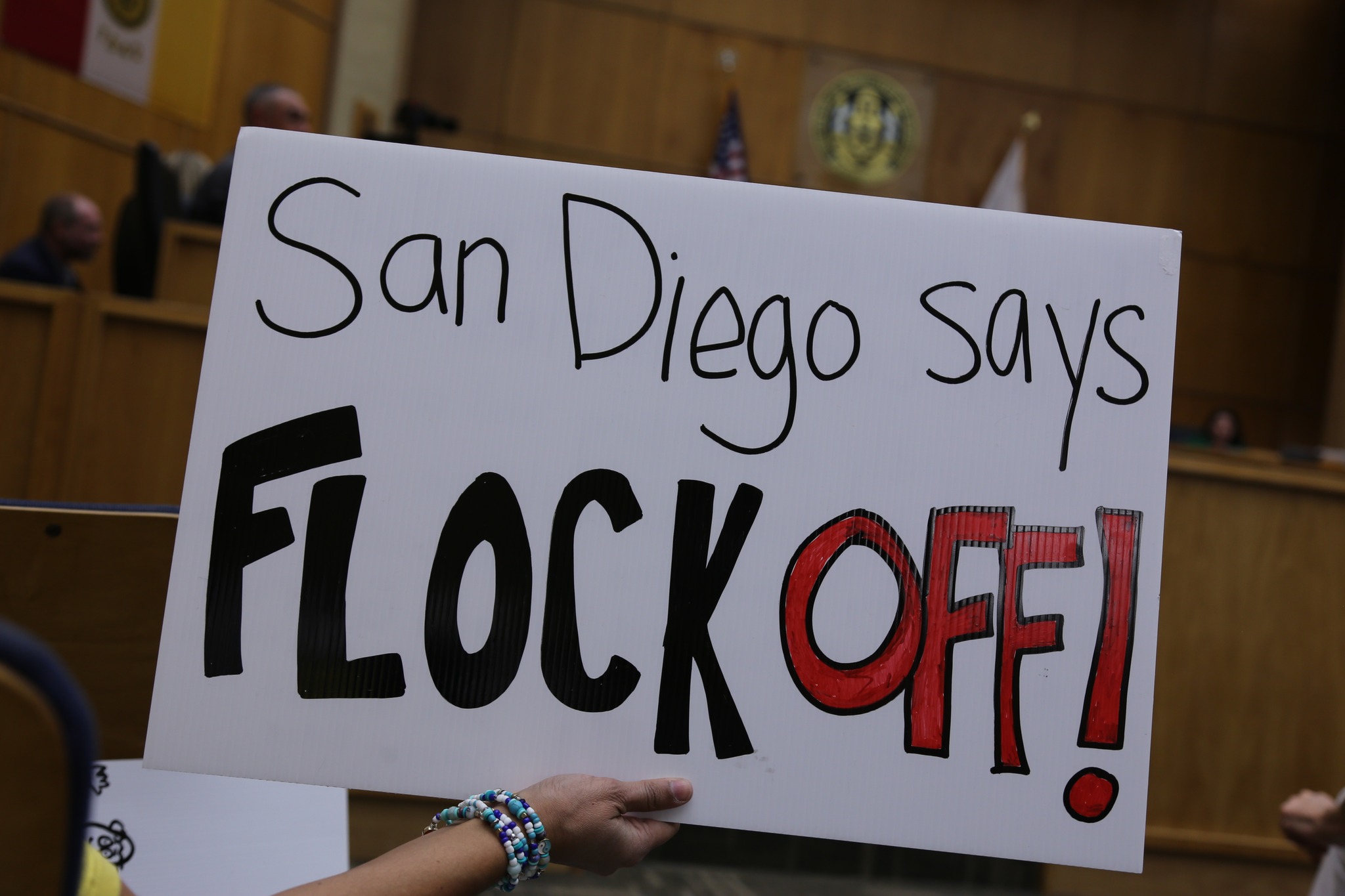
ACLU-SDIC Public Comment – End City of San Diego’s ALPR Contracts
By Branden Sigua
ACLU-SDIC Public Comment – City of San Diego Risk Management Presents on Settlements & Judgments Against SDPD
By Branden Sigua
Forum on ACLU Patent Challenge
Wednesday, August 5, 2009
5:30 – 7 pm
Featured speakers:
– Leonard Deftos, UC San Diego
– Kevin Keenan, Executive Director, ACLU
– Stacy Taylor, DLA Piper LLP
Reuben H. Fleet Science Center [Venue information]
This is a free event.
Click here for details on the event.
Click here to RSVP.
The lawsuit by the ACLU and the Public Patent Foundation, a not-for-profit organization affiliated with Benjamin N. Cardozo School of Law (PUBPAT) was filed in U.S. District Court for the Southern District of New York on May 12, 2009, on behalf of breast cancer and women’s health groups, individual women and scientific associations representing approximately 150,000 researchers, pathologists and laboratory professionals against the U.S. Patent and Trademark Office (PTO), as well as Myriad Genetics and the University of Utah Research Foundation,

Map of Locked Facilities in San Diego County
This map includes all of the locked facilities in San Diego county including:
Police holding facilities, represented by a “P”
Border Patrol holding facilities represented by the DHS logo
Federal prisons, represented by the orange placemarks
State prisons, represented by the green placemarks
County jails and prisons, represented by the red placemarks
Juvenile facilities, represented by the blue placemarks
Immigrant detention facilities, represented by the purple placemarks
Conservation camps, represented by fire
Free Expression Win as Judge Prohibits Government from Seizing Motorcycle Club’s Property
Landmark Lawsuit Accuses State of Failing to Protect Farm Workers from Heat-Related Death and Illness
How Can Science, Technology, & Engineering Help Civil Liberties?
Too little attention and effort have been given to ways that scientific discoveries and new technologies can solve civil liberties dilemmas.
Instead, we almost only ever hear about how modern advances reduce or violate civil liberties. It is true that scientific and technological advancements often have led to violations of the right to privacy, the right to dissent, and free association.
But, what if we could skim one percent of the problem-solving genius in our science, technology, and engineering communities and put it to work for the good of our social and constitutional values?
There are already many examples to inspire us.
In science, bioscience companies are succeeding in deriving the cells from embryos without destroying the embryo, and others have begun to assemble evidence that it is possible to sprout human embryonic stem cells from something other than a human embryo. To the extent these efforts are successful, they bypass a flash point in the culture wars between those who seek to save lives through research and those who worry about the destruction of embryonic life.
Technology has helped to advance civil liberties in many positive ways. Some of the most exciting and pioneering advancements are technologies that empower people with disabilities to be full participants in society, such as devices that move computer cursors by tracking eye movements. Another ripe area for innovations is privacy protection tools, such as encryption devices that protect emails from identity thieves and government snooping. Camera surveillance can invade privacy, but it can also serve to protect people’s rights, such as dashboard cameras in police squad cars that videotape police-civilian interactions and prove or disprove allegations of abuse.
In this section of our site, we will collect examples to encourage this type of problem solving.
Please note as well our three awards for youth projects that promote or reduce the harm to civil liberties at the Greater San Diego Science & Engineering Fair.
If you would like to help us, or if you have examples to share, please e-mail us at scitech@aclusandiego.orgl.
Stay Informed
Sign up to be the first to hear about how to take action.
By completing this form, I agree to receive occasional emails per the terms of the ACLU’s privacy statement.
By completing this form, I agree to receive occasional emails per the terms of the ACLU’s privacy statement.