Exhausted. Uncertain. Upset.
Since the second Trump administration began, I’ve heard community members, friends and family use these words to describe how they feel.
These feelings – and the broader sense of chaos – are not accidental. They are strategic. From the outset, the administration vowed to “flood the zone,” launching attacks on voting rights, bodily autonomy, immigrants’ rights, free expression, economic survival and beyond.
Their goal is to leave people overwhelmed, unsure where to focus their power and, ultimately, too exhausted to fight back.
But if flooding the zone is the tactic, making waves must be the response. That starts at the local level, where decisions directly shape our communities and where our voices can have the most immediate impact. By engaging locally, we can address issues impacting our communities, help protect them from federal overreach and build the networks and momentum needed for long-term change.
While the world feels – and, at times, is – out of control, many of the tactics this administration is using to create harm are ones that our own local communities have been experiencing for decades. Violence at the hands of law enforcement, family separation, and the weaponization of the criminal legal system and deportation systems are not new. For years, community members and community organizations have laid the groundwork for organizing and advocacy against these tactics, and now is the time to harness our people power to fight back and create change on a local level.
Local institutions like county boards of supervisors and school boards are centers of power and decision making that are within direct reach of all of us. These elected bodies control massive annual budgets and, depending on jurisdiction, manage essential services from mental health funding to park development to ensuring students have access to the books and learning materials they need to help them succeed.
The people that are decision makers in these elected bodies are not based in Washington, DC or even Sacramento – they are here in your community.
Yet, too often, these crucial channels for influence are overlooked, and local officials do not hear the diverse perspectives and voices that represent our region.
County Boards of Supervisors
A county board of supervisors controls budgets, public services, housing, policing, and health and mental health programs. The San Diego County budget is $8.63 billion dollars – with that budget, the county could fund the payroll of the Padres 35 times over.
These boards can also pass policies to protect vulnerable communities. At a time when federal immigration enforcement activities infringe upon basic constitutional rights and endanger our communities, public pressure is essential.
After local advocacy efforts, the San Diego County Board of Supervisors recently passed the CLEAR Ordinance to limit government overreach and ensure county power is exercised lawfully, transparently and with accountability. The ordinance limits federal law enforcement access to county facilities, requires county contractors and vendors to safeguard protected personal information, and limits the county’s participation in immigration-related joint operations and task forces.
Local School Boards
Unfortunately, the attacks are not just limited to adult settings. We are seeing intense opposition to education equity in our schools as well. School boards make decisions that impact students’ quality of learning, such as influencing if schools meaningfully confront discriminatory discipline practices or allow harmful disparities to persist.
Another example is that last year, Grossmont Union High School District voted to cut librarian positions despite public outcry from students, parents and teachers. Private texts between some school board members showed a desire to end DEI and prevent ‘woke’ books from being available to students. In 2023, this board ended a contract with a nonprofit that provided mental health services due to concerns about its LGBTQ+ mental health programs. These actions demonstrate why ongoing local engagement is critical.
Local Advocacy: The Frontline of Civic Engagement
The ACLU-SDIC believes that local advocacy is where power becomes tangible and change becomes actionable.
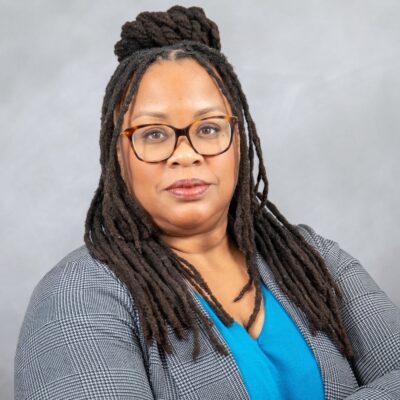
As the chief program and strategy officer at the ACLU of San Diego & Imperial Counties, part of my work is to help ensure people have the resources, tools and knowledge needed to make their voices heard.
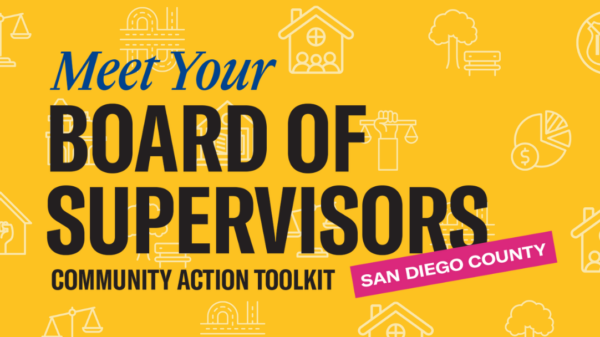
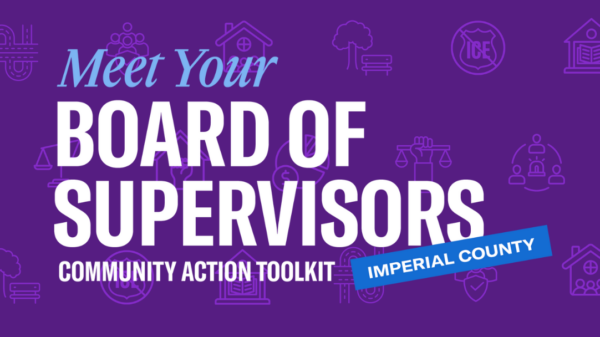
Over the past six months, we’ve launched toolkits (available in English and Spanish) that provide practical guidance on connecting with county boards of supervisors (San Diego and Imperial) and school board members. They also explain how to advocate for the values people expect their elected officials to uphold, fund and protect in this moment.
So, if you’re feeling exhausted, uncertain or upset, remember – that is what this federal administration wants. They are intentionally flooding the zone hoping that we quietly carry on while they continue to enact their authoritarian agenda.
While they are trying to divide and distract us with chaos, it is up to us to take action.
Reach out to your county supervisor or school board member. Invite a friend. Show up and share your expectations for how they respond to this moment with intention and purpose. Take the first (or 100th) step to build the communities we all deserve by pledging to meet your supervisor or school board member today. Advocating at a local level is how we can influence policies and secure protections that endure beyond any single federal administration.
Related Issues
Stay Informed
Sign up to be the first to hear about how to take action.
By completing this form, I agree to receive occasional emails per the terms of the ACLU’s privacy statement.
By completing this form, I agree to receive occasional emails per the terms of the ACLU’s privacy statement.